What Impacts the Cost to Install a New Shower?
Several components contribute to the overall price of a shower remodel. These typically include:
1. Demolition and Removal
Before anything new goes in, the old must come out. Removing a pre-existing tub or shower, correcting structural or water damage, or updating plumbing lines all add to the labor and timeline. Depending on your bathroom’s condition, this step may range from minor prep to significant demolition.
2. Shower Pan Installation
Your shower base, also known as the pan, is critical for both performance and water management. Traditional tile-ready shower pans require waterproofing, mortar bedding, and precise leveling. These tasks increase both time and cost.
In contrast, systems like the KOHLER low-threshold shower bases offer a modern alternative. With a sleek, barrier design and pre-sloped base, these units simplify installation, prevent water leakage, and provide easy entry—without the added steps of waterproofing or tiling. Drain locations (left, center, right) and pan sizes also influence price.
3. Shower Wall Materials
Your wall system is both a design element and a practical investment. Traditional shower tile installation often requires significant time, skill, and materials (tiles, grout, sealant). The cost increases with the complexity of tile patterns, specialty materials, or intricate layouts.
Innovative alternatives like KOHLER® LuxStone® offer engineered stone walls that mimic the look of stone in a material that simplifies long-term care.
These walls are:
Custom-fit to your space
Installed in as little as a day
Eliminate the need for grout
Reduce long-term maintenance

4. Fixture Selection
From rain-style showerheads to handshowers and multi-spray experiences, your choice of fixtures adds to both the look and the cost. Finishes like matte black or brushed brass tend to carry a higher price tag than standard chrome, while integrated technology (like digital controls) can also drive up costs.
5. Custom Add-Ons
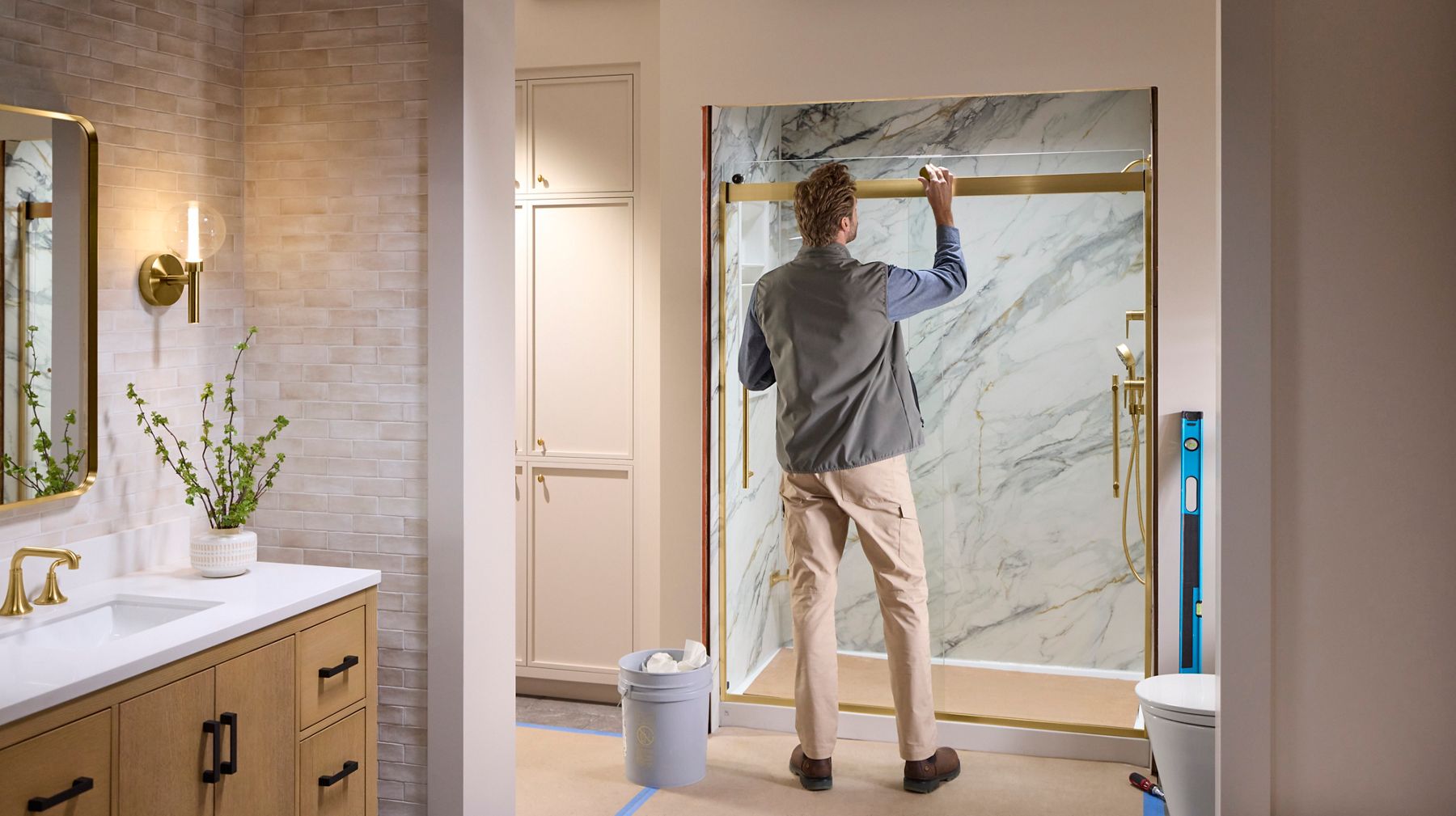
Upgrades like built-in benches, integrated grab bars, recessed shelving, and glass doors can elevate your space—and your bill. Sliding doors are typically more affordable than custom barn or pivot styles, but design preference and space limitations will ultimately guide your choice.
Hidden Costs to Watch For
Even with a clear vision, hidden costs can creep in if you’re not prepared. Some examples include:
Plumbing relocation (especially when switching from a tub to a shower)
Electrical upgrades (for lighting or smart features)
Permits depending on your municipality
Unexpected structural issues discovered during demolition
Working with an experienced contractor or certified installer can help you anticipate these variables early in the process.